

Indigenous women's rights, led by Indigenous women
INWOLAG is a non-governmental, non-profit, and non-political organisation established on 19 August 2000 by seven Indigenous women lawyers committed to protecting and promoting the dignity, rights, and well-being of Indigenous communities, particularly women, in Nepal.
25+
Years of advocacy
40
Districts reached
7
Provinces reached
7
Founding women lawyers
Our Mission
To create an egalitarian and prospective society where there is no domination and discrimination based on race, caste, ethnicity, language, religion, culture, gender, class, and region.
Our Vision
To create a condition where Indigenous women are recognized, and the language and culture of Indigenous peoples are respected.
What We Do
INWOLAG focuses on advancing Indigenous women's rights and access to justice through a holistic approach combining legal aid, advocacy, awareness, research, and empowerment.
- Legal Aid (Access to Justice)
- Indigenous Collective Rights (Right to Land, Natural Resources and Territories)
- Conservation and Protected Parks
- Gender Just Climate
- Research, Publications and Policy
Why We Do
INWOLAG's objectives stem from a deep commitment to justice, equity, and empowerment for Indigenous women and communities long marginalised by Nepal's legal and socio-political structures.
- Increase access to justice for Indigenous women and girls.
- Eliminate discrimination, exploitation, and violence through awareness and advocacy.
- Uphold Indigenous collective rights, including land, resources, and traditional knowledge.
- Support community resilience against structural inequalities, gender-based violence, and climate and development impacts.
- Promote Indigenous women's leadership and representation in decision-making processes.
Who We Are
Established on 19 August 2000
Indigenous Women Legal Awareness Group (INWOLAG) is a non-governmental, non-profit, and non-political organisation established on 19 August 2000 (3 Bhadra 2057 B.S.) by a group of seven Indigenous women lawyers committed to protecting and promoting the dignity, rights, and well-being of Indigenous communities, particularly women, in Nepal.
INWOLAG was established for Indigenous women and girls, recognising the fact that national laws and legal systems often overlooked the distinct social, cultural, and linguistic traditions of Indigenous communities.
Positioning itself as a trailblazing Indigenous women's rights organization, our vision is to build an equitable society free from discrimination and violence, where the collective rights of Indigenous communities are recognised and respected.
Our Objectives
Justice, dignity, and collective rights
- To increase access to justice to Indigenous women and children by providing legal aid service, legal counseling, legal advocacy and mediation to Indigenous women and children to secure their legal and human rights.
- To conduct investigation, study, and legal research on various issues of Indigenous peoples with a focus on Indigenous women and children, including international laws relating to Indigenous women and children.
- To advocate for the socioeconomic, cultural, educational, and intellectual agenda and issues of Indigenous women and children.
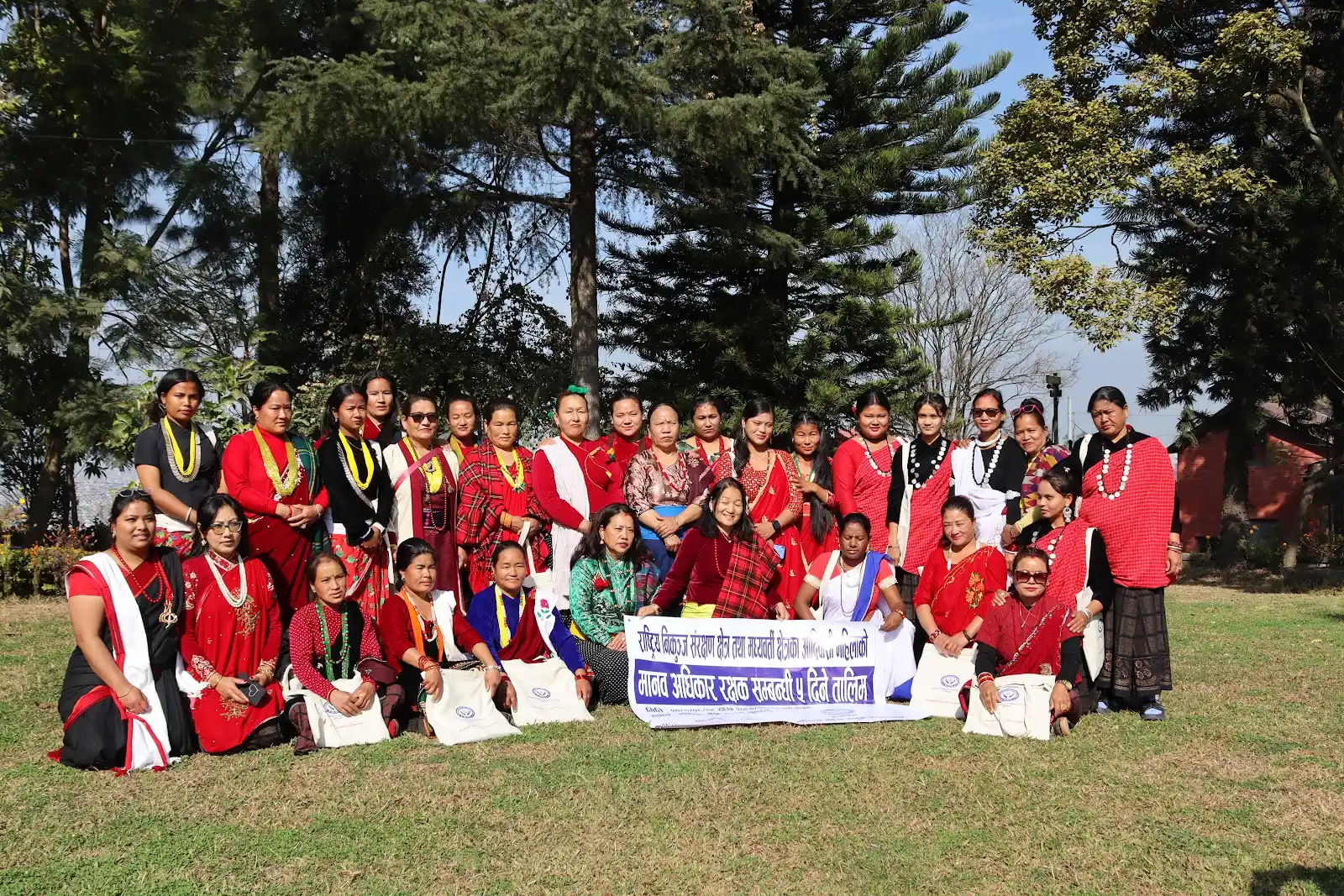
- To raise legal awareness among Indigenous peoples and marginalized communities to eliminate all forms of discrimination, exploitation, and violence against Indigenous women and children through publications, media partnerships, trainings, workshops, interactions, seminars, symposia, dialogues and talk programs.
- To monitor incidences of human rights violation, with a focus on violence against Indigenous women and children, and carry out field investigation where necessary.
- To work for effective implementation of international human rights standards with a focus on UNDRIP, ILO Convention 169, and CEDAW.
- To work for the political rights of Indigenous women, especially their representation at federal, provincial, and local levels.
Where we have worked
INWOLAG has extended its work across 40 districts in all seven provinces of Nepal, particularly in regions with a high concentration of Indigenous populations and significant human rights challenges.
Core thematic areas
Click an area to see its timeline of cases, activities, and publications.
INWOLAG in Media
Watch coverage, interviews, and features on INWOLAG's work with Indigenous women across Nepal.
INWOLAG in the media
INWOLAG in the media
INWOLAG in the media
INWOLAG in the media
INWOLAG in the media
INWOLAG in the media
INWOLAG in the media
The people behind INWOLAG
Guided by a dedicated Board of Directors and supported by an extensive regional network of advisors and focal persons.
Loading board members...
How INWOLAG Is Organized
Our governance and staff structures work together to guide strategy and deliver programs on the ground.
INWOLAG Organogram
Board governance structure.
- ChairpersonAdv. Indira K. Shreesh
- Vice ChairpersonAdv. Uma Tamang
- SecretaryAdv. Kaushila Rai
- TreasurerAdv. Ritu Thapa
- Executive MembersAdv. Mon Kumari RaiAdv. Rita SherpaAdv. Jayanti Rai
- General Members
Staff Organogram
Program and operations staffing structure.
- Executive Director(ED)
- Program/Project Coordinator
- Finance/Admin Officer
- District Focal Person
- Community Mobiliser
- Legal/Program Officer
- Office Assistant
- Project/Program Assistant
- Psychosocial Counselor
Our Partners